 My name is Emily, and fifth grade is going to be a disaster! Our teacher Ms. Graham says we can't change seats all year, and I didn't get to sit in a group with my best friends. Her teaching style is a little strange, like having a class frog, but I like some parts of it. I got elected to the class council, so I get to decide any new class rules. I used to miss sitting by Aviva, but the change has made me meet new classmates who I really like. Sharon and Cecilia are really cool, although I wish they'd talked me out of my idea for the class project. I should have known it was really dangerous and wouldn't end well. However, I never would have imagined how it might affect Ms. Graham. Some parents are making it into a huge problem for her, and I know I have to do something to help.
This book was a finalist for the 2019 Cybil's Book Award in Middle-Grade Fiction. The frog in the title refers to the classroom pet. The most notable feature of the story is that it's told from the journals of various fifth grade students using different genres. It shares a myriad of personalities that span those found in common classrooms. They include a high-achiever, a shy/quiet girl, a class clown, and a mental bully. Readers can experience the assorted points of view and hopefully find a connection with one of them. However, I found it more difficult to identify with one character due to the constant changes. Emily was the main character, but her story alternated with seven other classmates. I found the second half of the book more enjoyable, as the students developed a common purpose. This made their stories flow together better, plus the issue was pretty serious. The book addressed many current social issues like poverty, immigration, access to education, and homelessness. Overall, the book made me think, which is the sign of a good story. I recommend you give it a shot.
 My name is Rain, and we're moving from Vermont to New York City. Only three of us are moving, not four, but I can't talk about Guthrie. It'll upset my parents more, and they're fighting enough as it is. Plus, there's my secret that no one knows. Our new apartment is tiny, only two bedrooms and one bath, and I've never heard so much Spanish being spoken in one place. Frankie is the super's daughter, and at least she doesn't seem to hate me anymore. We both love to run, and she's talked me into joining her relay team at the City Championship. Until, I found out the race is on June 15. There's no way I can run on the day of The Anniversary. That's Guthrie's day. I don't want to let the team down, but that day will be painful.
This book was a finalist for the 2019 Cybil's Book Award in Middle-Grade Fiction. The main issue concerns how the Andrews family deals with the loss of a child. Mom wants to not talk about it and move on, dad's still in mourning, and Rain is somewhere in between. Rain tries to deal with the tragedy herself, but Frankie and running help her develop a support group. The school poetry project introduces another genre into the book, as Rain tries to sort out her feelings. Frankie is also dealing with the loss of someone close to her, although Reggie only moved away. The neighborhood is filled with many Spanish-speaking people, so Rain felt really out of place in the beginning. However, this setting provided many opportunities to share culture from the Dominican Republic. Spanish words were blended well into the dialogue, and cultural foods were available around the streets. The book points out that only 25% of marriages survive the loss of a child, so that's a big problem for Rain. The book touches on homelessness, and the community comes together to help one of its own. Overall, this was a fantastic book dealing with compelling problems, and I highly recommend you give it a shot.
 My name is Viji, and I knew I needed to take you far away from our parents, Rukku. When Appa first hit us, I knew he'd never stop and Amma wouldn't do anything about it. I'd never seen so many people in one place until we got to the city. Teashop Aunty showed us kindness that first day, and she even gave you beads to make necklaces. That was your favorite thing to do. Later, we made a "home" under the bridge where Arul and Muthu made us part of their family. They were so nice to us, especially you, and they made me see that maybe I'd underestimated you. It was my job to protect you. The boys showed us how to live on the streets, but they couldn't protect us from all the dangers.
This book was a finalist for the 2019 Cybil's Book Award in Middle-Grade Fiction. The author addressed the poverty in India that was reinforced by its caste system. Viji's relatives had disowned the family, since her mother had eloped and married a man from an even lower caste. Viji said her sister was slow, but there wasn't any more detail until the term learning disability was brought up late in the book. The sisters were lucky to find Arul and Muthu, although the homeless boys didn't want to think about the future. It was hard enough to live one day at a time on the streets. In contrast, Viji dreamed of someday becoming a teacher, and she thought Rukku could open her own bead shop. An interesting subplot was Arul's belief in the Christian religion. He prayed to one god and told the others stories from the Bible. They listened but didn't really understand his thinking. The book shared a lot of information from the Indian culture, but the author blended it smoothly. I never felt like the book was trying to teach me new knowledge. The last part of the book was pretty emotional, but most of the main characters lived happily ever after. The fact that Viji was narrating the story provided some foreshadowing of the end. Overall, this was a wonderful story, and I highly recommend you give it a shot.
 My name is Iris, and I know I have to do something to help Blue 55. He's a hybrid humpback whale, so his song is at a decibel level that other whales don't understand. It forces him to travel the ocean alone since he can't communicate with other whales. I have a similar problem with some non-deaf people. Scientists are trying to tag Blue 55 at a Sanctuary in Alaska, so I emailed a woman there named Andi. That gave me an idea. What if I came up with a song for Blue 55 to show him he's not alone? I talked to our school's music teacher, and he thought it was a great idea. Other students helped out, and now I have a perfect song for Blue 55. But how will I get him to hear it? And I can't explain my feelings, but I just need to be there when he does.
This book was a finalist for the 2019 Cybil's Book Award in Middle-Grade Fiction. The most unique aspect of this story was the fact that Iris and her grandmother were deaf. Communication with non-deaf characters sometimes frustrated Iris, and she hated when she was underestimated by strangers. She was a tech-wizard and loved repairing antique radios, a very unique hobby for a middle-grade student. The story promoted the importance of conserving wildlife, with a focus on whales. It shared many facts about whales including their different water spouts, migration, and feeding habits. In addition, the book includes details about sign language and communication between the deaf and hearing communities. Iris was quite resourceful. A subplot dealt with Iris's desire to attend a middle school for the deaf along with her best friend. Her parents didn't feel she was responsible enough, but the issues went deeper than that. Overall, this book was very entertaining and enlightening, and I recommend you give it a shot.
 My name is Ellie, not Lily. Most people notice my wheelchair first, and that really bugs me. My mom and I are temporarily staying in my grandparents' Oklahoma trailer park, since my grandpa's Alzheimers is getting worse. I mean, he found out where Mema had hidden the car keys and drove right through the front window of the grocery store! Enrolling in the tiny middle school would have been worse if it hadn't been for Coralee. My first, and only, best friend gets me and doesn't judge me because of my Cerebral Palsy. She's going to be a famous actress someday, and I'm going to be the world's best chef. I practice cooking whenever I can, even though most kids don't understand me. The next step in my cooking career is winning the Bethlehem Methodist Bake-Off, if I can only figure out what to make.
This book was a finalist for the 2019 Cybil's Book Award in Middle-Grade Fiction. Ellie's disability was a central topic, as she dealt with the complications and tried to be "normal". Her mother made this more difficult, as she tended to be overly protective. The other main topic was her grandfather's deterioration with Dementia. He had good days that evoked Ellie's fond memories, but the more serious ones had the family discussing his future in assisted-living. The highlights of the book were Ellie's interactions with her friends. Coralee immediately became her best friend, although Coralee's bluntness and openness weren't always welcome. She liked to tell Bert to work on his filter when speaking, but she needed to heed her own advice sometimes. Social status was an issue too, as Coralee said being from the trailer park made other students view them as inferior. All of these problems, and others, had Ellie's mind all jumbled. Again, she just wanted to be like everybody else, but her troubles would continue until she accepted herself. The book was a wonderful blend of humor and serious, and I recommend you give it a shot.
 My name is Mila, and I'm slowing realizing I have a problem. I know seventh grade boys are weird, so I wasn't sure what to think when some basketball players wanted to hug me. One of them said it was for good luck, but they've been making me feel very uncomfortable. After the incident on the bus ride home from school, I know other people are noticing too. However, I'm embarrassed to tell my friends, and I think Zara is getting mad at me. Maybe I'm overreacting. I've told the boys to stop touching me, but now I know they won't. Callum and Dante made that clear during band. My mom seems stressed about her job and her new boss, so I can't bother her.
This book was a finalist for the 2019 Cybil's Book Award in Middle-Grade Fiction. Its primary audience is middle-grade girls, although middle-grade boys should read it too. I'm doubtful it will appeal to the boys. The theme of the book is sexual harassment even though it's not given that label until late in the book. Mila feels uncomfortable with how the boys are treating her, but she doesn't understand how to deal with the problem. Is it teasing or flirting, or something more? Her reluctance to seek help allows the problem to grow, and one friend suggests that she's partly to blame or she's over-reacting. These situations and reactions are common for females of all ages, so the topic is very relatable for everyone. The author is able to evoke emotions from readers that will allow you to empathize with Mila's plight. The attacks seem small in isolation, but the seriousness grows as they accumulate. She feels lost, desperate, and alone. Ironically, she's most urged into action by a boy she knows and a girl she barely speaks to. The climax to the plot was unexpected, but effective. Overall, the story was compelling, and I recommend you check it out.
 My name is Coyote, and Rodeo and I have been driving around the country in an old school bus for the past five years. I can't ever let Rodeo hear me call him dad, since he doesn't want to think about what happened. I miss my mom and sisters too, and I can't let bulldozers ruin my memories. I've got four days to figure out a way to get Rodeo to drive us back to Washington State. We've added a diverse group of passengers along the way, and I hope they'll help me in my quest. The mapping app on their cellphones has helped me calculate our driving time, and I think we'll have a few hours to spare. If nothing unexpected happens. Rodeo's going to start suspecting something's fishy, if he doesn't already, but I've got to get home before it's too late.
This book was the winner of the 2019 Cybil's Book Award in Middle-Grade Fiction. My favorite part of the book was Coyote's character. I felt sorry for her, as Rodeo's difficulties in dealing with death made it harder for Coyote to handle it. However, the girl had spunk, compassion, and determination. She had no trouble meeting strangers and was more than willing to help them with their issues. There were Latinos fleeing an abusive situation, a black man caught between his girlfriend and his career, and a runaway teenager trying to cope with her identity. Coyote's need to return home was always at the center of the plot. Some readers might disagree with Rodeo's parenting style, but I have a different spin on that. Coyote was a phenomenal girl, and that grew from Rodeo's role as her father. He was a good person. His mind chose to avoid death, but he displayed an empathy for others and Coyote knew she was loved. The manner in which the author chose to handle death opens the door for discussion and thought, which are positive things. Overall, this book was my top choice for the 2019 Cyblis Award, and I highly recommend you give it a shot.
 My name is Pavel, and Cam is the Leonardo DaVinci of slackers. The guy is an artist and created a fake club at school to give himself more video game time. Of course, he wouldn't need the P.A.G. if he hadn't almost burned down his house. Word of the club is slowly spreading around school, and kids think it's real. Over half the students have joined the club, and that's creating a new problem for Cam. Everyone wants to know about the next big project, but he doesn't want to have anything to do with it. It's cutting into his Rule the World practice. The P.A.G. is doing great things around our town, but there are some complications we can't solve. Someone is trying to ruin the club by undermining its efforts, and the freeway exit ramp is going to be demolished. Destroying the ramp will destroy the whole town.
I actually read the second book in the series before reading this one, and I wish I'd read them in order. The essence of this book boils down to Cam's obsession with playing video games. He will go to any lengths to protect his time on the couch. He's self-centered and lazy and has little tolerance for people and events that upset his routines. However, the plot slowly demonstrates Cam's evolution as a person. Having already read this book's sequel, I know the changes are still a work-in-progress, but it's still nice to feel some positive vibes about his character. Much of the book's humor, an expectation in Korman's novels, comes from misunderstandings. Cam doesn't want to get involved and is reluctant to say anything to other students and the teachers. This behavior opens the door for other characters to make assumptions, often far from the truth. Cam's strategies for avoiding attention add to the humor. Overall, I enjoyed the book and recommend you give it a shot. If you like this one, you'll love its sequel.
 My name is Magpie, and I can't let the Montgolfier family discover who I really am. They don't know I'm the one who broke into their home and stole the secrets for a flying prototype. Through a twist of fate, I'm now living under their roof with my rooster Coco, but I know an English spy is watching my every move. I won't break the Montgolfiers' trust, but the spy is threatening to reveal the truth about me. It feels good to do honest chores around the estate, and I'm very interested in helping with the flying project. I'm good at noticing things, and I've made a couple of helpful suggestions. The race with England is heating up, and France's King Louis is pressuring the Montgolfier brothers to finish first. I know it's dangerous to stay, but I feel like I need to see this project to the end.
The book was historical fiction, as it chronicled the history of the first balloon flight. I read a short summary about the event and discovered this book included many of the actual facts. The locations, discovery of hot air, and the animals used were true. Fictional liberties included Magpie's contributions and her role on the day of the flight. It was interesting to see the inventors' struggles to find the right designs and materials to create something capable of remaining off the ground. As 21st century readers, it might be hard to appreciate concepts the characters had not yet discovered, like hot air rising being an important factor. Some ideas seemed silly, like putting fire under paper, but Magpie's observations of her surroundings were ingenious. The author created a plot by using Magpie's past as a thief to maintain a constant threat to her character. The woman threatening Magpie created a bit of a mystery, since her motives were unknown. If she was a spy, why didn't she seem more interested in the stolen plans? I don't often read historical fiction, but I enjoyed this book. If you're into that genre, give it a shot.
 My name is Cam Boxer, and video games are my life. I'm going to get thousands of people to watch me play online, and then I'll have a job that I love! The only problem is this club I kind of started at school. I wasn't serious about it, but now hundreds of classmates have joined and want to help me perform community service. I don't have time for that! It's really interfering with my gaming. One good thing that's happened is Elvis. I've discovered this local beaver loves to watch me play video games, and my viewers like to watch him watch me. The rodent stinks and leaves a mess, but I know he's going to help me get fifty thousand subscribers. The recalled, controversial video game I found won't hurt either. I'm going to have the best career ever!
I had already started the book before discovering it's the second one in a series. It has Korman's usual style and tone with normal kid topics mixed with humorous dialogue and situations. Elvis provides an extra touch of wackiness. Cam has an amazing knack for being lazy but somehow always comes out smelling like roses. It drives his sister crazy, and I tend to agree with her. Korman includes concepts of friendship, public service, environmental conservation, and family. One of Cam's buddies gets his first girlfriend, and it helps to complicate the plot. She also provides some relief for Cam, as he allows a misunderstanding to get blown way out of control. He has mixed emotions about the situation, and it becomes very important in the plot's climax and resolution. As expected, Cam emerges from a horrendous, embarrassing problem into the revered hero of the school. How does he do it? You'll love the book if you like to laugh and you like video games. I recommend you give it a shot.
 My name is Mia, and my parents were hired by Mr. Yao to manage his motel. It seemed like a great deal, and my parents were desperate, but Mr. Yao is a penny-pinching, vile, bigoted miser. I know those are big words for a recent Chinese immigrant, but I love English and I've recently discovered Roget's thesaurus. I hate how unfairly Hank, one of our weeklies, has been treated by Mr. Yao and the police, and I want to help. While my parents believe in fate, I'm going to do something to get off our roller coaster life. I'm writing more letters and notes now, but I'm not sure if I'll write the most important one. It could change my family's lives, but I probably don't stand a chance. Then there's the $300 I need to do it.
This book told an intriguing story of immigrants trying to live the American Dream. Mia's family learned that reality often differs from perceptions. They felt like slaves, since their lack of options led to Mr. Yao taking advantage of them. The big issue underlying many of the problems was prejudice and bigotry. The main targets were black citizens and Chinese immigrants. Mia's parents secretly assisted struggling friends, while Mia had her own obstacles in school. She had great compassion for others and wasn't content to sit back and ignore injustices. That was refreshing to see, as she experienced her own hardships. The topic of writing was also refreshing, as electronics weren't part of the story. They weren't prevalent in the 1990's, and the characters couldn't afford them anyhow. Mia actually wrote with paper and pencil and used stamps to mail letters! While the results of some letters were unrealistic, the plot demonstrates the potential positive consequences of people taking action. Don't expect good things to happen if you don't do something first. Overall, the book is inspirational for people who feel like they don't have a chance to succeed, and I recommend you give it a shot.
 My name is Tessa, and my life entering high school is getting complicated. Caleb and I have done things together for years, but he's now my boyfriend. He knows I'm a great cross-country runner, but he admits I also have the skills to play football. However, I don't think he wants me to play on the high school team next year. I really want to try out. I need to make up for my dropped touchdown pass in the flag football title game, plus my mom is against me playing football. She's running for mayor and wants to control my life, but she can't stop me now. Voters know about me. I wish everyone would stop worrying about me getting hurt, and I wish Caleb would be more supportive. This is something I need to do. I need a victory.
The summary above tells you all you need to know about the book. I never had a concern with girls wanting to play for our school football team, but it's been an issue in public schools for many years. Tessa's mom is a big problem, as her parents are often too busy to show interest in her. Tessa feels a little isolated, since no one is openly supportive. The conflict is a common one, as she wants to make her own choices, not necessarily the ones others want. Caleb's brother doesn't want to become part of the family business, and Caleb realizes he may be headed toward similar decisions. Dealing with parental expectations is hard. The book is told alternately through the eyes of Tessa and Caleb, so readers can understand the confusing thoughts going through their minds. Caleb has the additional problem of trying to figure out how to function with his first girlfriend. Again, this is a common experience for middle grade students. Overall, the story will be relatable to most readers, and you should give it a shot.
 My name is Foster, and I knew Dax was no good. He's lazy, drinks too much, and scares me whenever he comes to see my mom. I don't blame Joe for wanting to bite him, but I'm afraid Dax will kill him someday. Then, Gary showed up. He was walking all the way to Texas, but he's been staying in our barn for a couple of weeks. He said he fought in Afghanistan, and Joe and I trust him. Dax doesn't. Gary's been helping to clean things up around here, since my mom wants to sell the farm and move away. I look forward to waking up every day to help him. Mom says he's keeping secrets about his past, and she's afraid I'm getting too close. I can't help it; I feel safe when he's around. Looking back now, I should have known that danger and pain were inevitable.
This book evoked some heavy emotions. Foster was still coping with the death of his father, as more about the incident was revealed later in the story. Dax introduced a level of danger to Foster, his mom, and his dog. While Gary brought a calming effect to Foster, his presence worsened the situation with Dax. These emotional journeys were the backbone of the plot. Foster lacked motivation to behave like a normal kid, and this left him isolated and alone. His one friend was his dog. With Gary's help, he slowly transformed and learned to deal with his issues. I'll admit there was sadness, so be prepared to be affected. I won't say everyone lived happily ever after, but they got on with their stories. Overall, I can recommend this book to readers looking for an emotional drama.
 My name is Kiana, and I'm in a special class for delinquents. I can't tell my dad or stepmom about it now, since I got the wrong schedule and never told them I'm not officially enrolled in school. Our "teacher", Mr. Kermit, hasn't taught us anything yet and spends his time doing crossword puzzles. The other six kids don't mind ignoring his worksheets, but I can't believe he doesn't even try to teach us. However, a new teacher is in the room next door, and she seems to know Mr. Kermit from way back. I think he may have dated her mom! He doesn't usually care about us, but I was impressed at how he fought to get Barnstorm back on the football team and how he was ticked that our room wasn't included in Spirit Week. Something happened to him a long time ago, and maybe there's more to Mr. Kermit than I thought.
A misfit teacher "leads" a misfit band of students to perform a great deed. The antics of the eighth-grade students are funny, although I wouldn't describe the book as hilarious. One student has anger issues, another is obsessed with sci-fi, and one girl is feared by everyone in school. In contrast, Kiana would be a great student if she attended a regular classroom. It creates an unusual blend. Each chapter is told through the eyes of a different person, mostly the students, and it works for this book. Each character has a unique background that affects the way they react to Mr. Kermit and school, and Mr. Kermit has his own issues. The central conflict is with the superintendent, as Mr. Kermit feels he was treated unfairly for a student's dishonesty. And he was. Mr. Kermit has mentally given up on teaching, although there are signs that deep down he still has feelings for his students. He's unmotivated to do anything constructive, but the new teacher next door becomes a catalyst for change, as does a former student. Overall, it was a wonderful book, and I recommend you give it a shot.
 My name is Flint, but most kids at school call me Squint because of my bad eyes. You see, I have a disease that makes my corneas really thin. I need to wear thick glasses, but nothing looks clear to me. Anyhow, I've been creating a superhero comic book even though I probably won't win the "Find a Comic Star" contest. I call the main character Squint, and he's leading a team to rescue the Empress. I usually work alone on the comic during lunch, but today a girl named McKell sat at my table. It turns out she has a brother with a very rare disease that makes his body age faster than it should. He has a YouTube show called "Danny's Challenge" where viewers are dared to do tasks that he can't do himself. Little did I know how much his show and McKell would change my life.
Wow, this book became much more than I expected and not like most of the books I read. Flint's eye disease was a very central problem, but it seemed to be a metaphor to his life. He had trouble physically seeing things, but he discovered his opinions of others may have been distorted too. He was forced to reflect on how he treated people and tried to understand things through their eyes. In addition, his comic became a therapy to deal with his own life. He added Diamond to its plot and had her support the main character, just as McKell was doing for Flint in real life. However, it turned out McKell had some serious emotional issues of her own. They combined with Flint's medical and comic book problems to create a compelling novel. "Danny's Challenge" became the catalyst for change, as his messages were always positive and urged viewers to action. The book presented an emotional rollercoaster, as there was drama, suspense, laughter, and tears. It will cause readers to think about how they treat others and consider the power of being positive. Overall, this was an outstanding book, and I highly recommend you give it a shot.
 My name is Billy, and I haven't seen my dad since I was three. He lives in Montana, and I've been told he does secret missions for the government. I flew to his home and met his new wife and daughter, and we're all upset that he's never contacted me. He had his drone watch me, but that was hardly a reunion between son and father. I finally returned home to Florida, and the next thing I knew, a drone was buzzing around my house. I decided to do something drastic, and it worked. I finally learned the truth about my father, but it's led to an unexpected adventure. I now find myself in the Florida wilderness with a shotgun and a hunting rifle on opposite sides of the law.
I've read other books by this author, Hoot and Chomp, and this one fit the same mold. You can expect to learn about endangered species along with other information about our country and nature. Billy was an expert on snakes, and his mother was obsessed with bald eagles. The beginning of many chapters started slowly due to flashbacks and facts about wildlife, but it was okay. Billy's half-sister and stepmother were members of the Crow Indians, and I learned a bit about their culture. The father's job was vague until the mid-point of the book, so it became a mystery for readers to solve. Solving the mystery wasn't a real problem though, since the father eventually revealed the secret to his son. The dynamic between his two families was very unexpected. Billy's character was quite virtuous and brave. He had a reputation at school and used it for his own protection and to help a nerdy classmate. His parents raised him to respect nature, and he became an advocate for other creatures. He once trashed a motorcycle after the rider intentionally ran over a snake. Some of his decisions seemed ill-advised for a thirteen-year-old boy. Overall, I really liked this book, and nature lovers will enjoy it too.
 My name is Ethan, and I have a chance to meet my hero Magnus the Magnificent! All I need to do is travel to Atlantic City and win my age category at the Magic Fest. I think my act is good, but is it good enough? I like practicing at home with my little brother Jake. He's confined to a wheelchair and can't speak, and his health can get seriously bad due to changes in his body temperature. Anyhow, things were going great until Ned arrived at school. We don't get along even though our mothers went to college together, but then he crossed the line. He called my brother a retard, and I lost it. There's no way I'm going to apologize for what I did, so Magic Fest is off. I mean, I shouldn't need to say I'm sorry for protecting my brother, right? I thought magic was the most important thing in my life until the day I received some horrifying news. I don't know what to do.
This book was a wonderful blend of love, humor, and sadness, and you can expect a roller coaster of emotions. It was fun to read about the tricks in Ethan's magic show, as they included talent and comedy. He displayed compassion for young and handicapped children, as most of his performances were for those audiences. Ethan tried to be an average middle school student and understood the importance of family. His character demonstrated admirable qualities for any protagonist. Ned and his family introduced a different type of problem for Ethan. Ned was dealing with his own issues and took them out on Ethan. Each character's anger kept him from trying to understand the other. Jake's character created a bumpy plot due to the ups and downs of his health. Even though he never said a word and couldn't move on his own, his character evoked strong feelings. Overall, the book presented a warm story of a family dealing with challenging problems. I liked it and recommend you give it a shot.
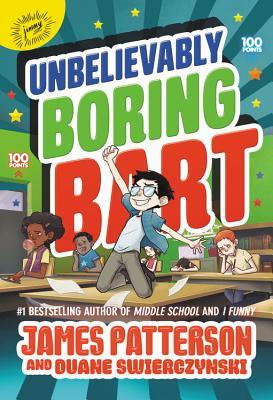 My name is Bart, and I've moved with my dad to a city near Los Angles. I'd be happy at my new school if everyone ignored me, but the bullies have other plans. I don't have any friends, unless you count CyberGirl03 living in my apartment complex. I spend most of my time secretly coding an augmented reality app called Hecklr. I shared it with CyberGirl03, but I don't know how the kids at school got a hold of it. I was shocked and proud when the app went viral, and now everyone around town is hunting the Lerkian aliens. We even have tourists from out of town converging on our city! It's kind of cool to see people looking into their Smartphones, searching for the little creatures. All of this attention is keeping me busy with creating updates and debugging the program, but I'm afraid I'll be discovered. What will happen if people realize I'm the boring loser behind this fantastic app?
You'll really like this book if you've enjoyed the humor found in other James Patterson books. It's told from a first person point of view, so you'll be inside Bart's brain. As described above, he wants to remain inconspicuous like many middle grade students, but his app draws interest from across the nation. Many people would relish the opportunity to be special and famous, but Bart's kind of shy. The bully problem is a very important factor in his life, but they're the only students who ever notice him. Much of his attention goes toward avoiding them or dealing with their conflicts. Even though I found the book fun to read, I must admit I wasn't sure where the plot was headed. The conflict didn't create major tension, and the events revolved around Hecklr. So where did the plot end up? It settled on a fun and funny story of a young boy trying to anonymously make his mark in an uncomfortable world. Overall, it was a quick-read of an entertaining adventure, and I recommend you check it out.
 My name is Janey, and my life changed forever the day Captain Superlative appeared in the school's hallway. I always tried to go unnoticed, but Captain Superlative ran around in her leotards, mask, and cape helping classmates by opening doors, picking up books, and creating study guides for tests. She said small deeds are just as important as big ones, and I listened. Her most dangerous deed was to protect Paige from Dagmar, the top student, best cheerleader, soccer star, and the seventh grade's biggest bully. Captain Superlative challenged Dagmar with truth and kindness, and none of us knew how to react. Then one day, I stood up to Dagmar too. What was I thinking?! My dad was proud of me, and Captain Superlative asked me to become her sidekick. Seriously?! I was shocked and terrified when I agreed to her request, and I just knew I'd become the bully's next target.
This book isn't like my usual adventurous tales of speculative fiction, but it tells a special story. The prologue begins the mystique, as the characters talk about Captain Superlative in the past tense. She's gone, and everyone is devastated. Then, the plot begins with Captain Superlative's first day of school and students calling her a weird freak. It creates an interesting contrast to start readers wondering. Janey's still dealing with her mother's death from three years ago, and she doesn't want to draw attention to herself. That's a common feeling among middle grade students, so they don't open themselves to teasing. Captain Superlative shows up in the plot spreading help and kindness to others and forces Janey to question why that's strange. What's wrong with being good and nice? Janey's character transforms in many positive ways, although she refuses to wear a superhero uniform or change her name. As the plot progresses, readers will learn there's more to Dagmar's anger than meets the eye, and it becomes clear that something is physically wrong with Captain Superlative. Janey seems to be the last one to know. Captain Superlative is a warm, heart-felt book that I can strongly recommend for your reading pleasure. With that being said, be prepared for an emotional ending.
 I am the Masked Avenger, and I protect the citizens in the homes along my street. I have knowledge about the power stored within different stones, and I use them to enhance my own personal characteristics. Recently, while on patrol in the middle of the night, I've been concerned about the woman living in the house at the end of the street. I heard yelling and screaming, and her husband stormed out of the house. I know she's sad, and it's up to me to change that. I know amber has the power to bring happiness, so I gave her an amulet I found in my mother's room. However, I didn't know the amulet belonged to my mother's grandmother, and now my mom is devastated. The Masked Avenger can't ask the woman to return the jewelry, so I must use my powers to think of another solution.
The endearing part of the book was the way the author described Liam, the Masked Avenger. In the beginning, it was unclear if he actually had superpowers or only a vivid imagination. The boy had a creative mind. As I read the book, I tried to figure out if middle grade readers would enjoy it. Liam was a cute, young boy and will appeal to elementary-age readers. His alter-ego was only concerned with the happiness and well-being of his neighbors. On the other hand, the book had some serious thoughts about love and marriage, and I'm not sure young readers will be interested. Liam's father divorced his mother, and Liam feared his father had fallen out of love with him. Liam was able to get the woman at the end of the street to reflect on her own marriage. I also questioned a situation where a young boy was able to wander his neighborhood at night and would give away a valuable amulet from his mother. It would be different in a fantasy novel, but I had some problems with it in a realistic fiction. Overall, the book will be fine for the right audience; I'm just not sure it's right for followers of my blog.

